My life is so different now than when I started blogging. In the past four years I've become a mom, moved into a bigger house, switched jobs, and, most recently, started commuting by public transportation. I like my life a lot more now than I did four years ago but one thing kind of sucks - I don't read books anymore. I still read magazines, websites and some blogs, but I hardly ever sit down and read for an extended period of time. And I get terribly car sick, even on the train, so that's out. Happily, I recently found a solution - audiobooks!
This may be an incredibly obvious solution to you, but it took me a while to warm up to the idea. "Listening to a book doesn't count," I thought. And I think being read to is terribly boring (I even hated it when I was a kid in school). But my husband loves audiobooks and when a friend lent me her old iPod, filled with good books, and I decided to give them a try. I love it.
The caveat, of course, is finding the right audiobook. It's important to find a good book from a good writer and it may be even more important to find a good narrator. The best audiobooks aren't like being read to at all - they are more like listening to old radio plays. Two of my favorite books I've listened to so far are The Graveyard Book and Neverwhere, both written by and read by Neil Gaiman. Gaiman does voices and just imbues the story with so much charm - I loved them. On the other hand, I tried listening to Gaiman's Good Omens (co-written with Terry Pratchett and reviewed by me here). No offense to the narrator, but he just left me cold and I found my mind wandering from the story. I stopped after just a few chapters.
By the way, I highly recommend using an audiobook app, like Audible, to listen, rather than just playing the book via your regular music player. The ability to just back a few seconds and to place bookmarks is key - it got rather frustrating when I was listening to my books on the iPod.
Wednesday, November 7, 2012


Monday, April 30, 2012
Poetry Month
Today is the last day of April, the cruelest month, and therefore the end of National Poetry Month.
When Adrienne Rich died last month, I found a letter to the editor she wrote in 1997 on Why [She] Refused the National Medal for the Arts. She wrote a lovely, thought-provoking letter, but my favorite part quotes other writers, which I present in honor of April.
When Adrienne Rich died last month, I found a letter to the editor she wrote in 1997 on Why [She] Refused the National Medal for the Arts. She wrote a lovely, thought-provoking letter, but my favorite part quotes other writers, which I present in honor of April.
"If there were no poetry on any day in the world," the poet Muriel Rukeyser wrote, "poetry would be invented that day. For there would be an intolerable hunger." In an essay on the Caribbean poet Aime Cesaire, Clayton Eshleman names this hunger as "the desire, the need, for a more profound and ensouled world."
Saturday, March 31, 2012
An update, of sorts
Um, hi, everybody. It's been pretty quiet around here, hasn't it? I posted only 14 times in all of 2011. and most of those were posts I had at least started before my daughter was born. What did I do instead of blogging? Mostly, I got to know my daughter. She's 14 months now, on the cusp of walking and has the best laugh in the world.
I also had a pretty tumultuous year, career-wise. Not long after I returned to work after maternity leave, I was laid off from the position I had held for six years. It was awful to be let go, but really liberating, too. I spent the summer freelancing and doing contract work, which gave me the opportunity to spend some great time with my family. At the end of the year, though, a new opportunity came up and I went back to work full time for a new firm.
I haven't quite decided what all this means for my blog. As much as I love reading and sharing my passion for books, I don't know if that passion extends to blogging anymore. But neither am I ready to go away entirely. So I guess I'll just keep posting when I feel like it and see what happens here once my life settles down a little. Feel free to drop me a line anytime.
I also had a pretty tumultuous year, career-wise. Not long after I returned to work after maternity leave, I was laid off from the position I had held for six years. It was awful to be let go, but really liberating, too. I spent the summer freelancing and doing contract work, which gave me the opportunity to spend some great time with my family. At the end of the year, though, a new opportunity came up and I went back to work full time for a new firm.
I haven't quite decided what all this means for my blog. As much as I love reading and sharing my passion for books, I don't know if that passion extends to blogging anymore. But neither am I ready to go away entirely. So I guess I'll just keep posting when I feel like it and see what happens here once my life settles down a little. Feel free to drop me a line anytime.
Monday, January 16, 2012
Review: Magyk: Septimus Heap, Book One
There are a lot of books out there angling to be the next Harry Potter, aren't there? That's certainly how the Septimus Heap series was being advertised when I picked up the first volume, Magyk (last year, when the sixth novel was published). There are a few parallels - there's a magical boy and his friends - but not a lot.
The series is about a boy who is the seventh son of the seventh son and therefore has extra special magic powers. His best friend is secretly the heir to the castle, which is ruled by the bad guy. Book 1, Magyk sets up the series and not much else. I felt that, as a stand alone book, it was pretty thin. Maybe this is one of those cases where I'm not the target audience and a middle grade reader would love it. Then again, why should we assume kids need to be talked down to? If I can see the "twist" ending telegraphed from page one, I think my 8-year-old nephew could too. It's not a terrible book - the characters are interesting, the premise is fine - but it certainly doesn't make me want to read the rest of the series.
The series is about a boy who is the seventh son of the seventh son and therefore has extra special magic powers. His best friend is secretly the heir to the castle, which is ruled by the bad guy. Book 1, Magyk sets up the series and not much else. I felt that, as a stand alone book, it was pretty thin. Maybe this is one of those cases where I'm not the target audience and a middle grade reader would love it. Then again, why should we assume kids need to be talked down to? If I can see the "twist" ending telegraphed from page one, I think my 8-year-old nephew could too. It's not a terrible book - the characters are interesting, the premise is fine - but it certainly doesn't make me want to read the rest of the series.
Thursday, December 29, 2011
Review: The God Engines
This book - The God Engines by John Scalzi - was intense. Normally, half of my review of a novella or short story is kvetching that the story was too short, the author should have delved deeper, etc, etc. Sure, Scalzi probably could have gone more in depth and revealed more about the world he's built here but I'm not sure I'd want to go any deeper. This is a book about unpleasant people doing unpleasant things. It was intriguing and a good read, but not something I think I'll read again.
Thursday, December 8, 2011
Review: Dreams from My Father
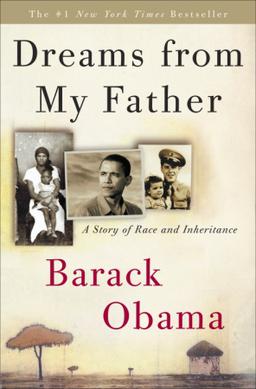 Dreams from My Father: A Story of Race and Inheritance is a memoir by President Barack Obama, written after he was the first African-American elected president of the Harvard Law Review. It was first published in 1995, before his first political campaign, and was republished in 2004, during his U.S .Senate race. So while there are politics in this book, it is not about his life as a politician. And unlike so many of the books politicians put out during a campaign, it is still interesting to read when the race is over.
The outlines of President Obama's life are well-known: his white mother from Kansas and his black father from Kenya met in college in Hawai'i, married, and had him. Soon after, his father left, first to go to Harvard, then back to Africa, and only returned for a month when Barack Jr was 10. Barack Sr. died without his son having gotten to know him as an adult.
Dreams from My Father can be read on two primary levels: one is simply as a man's life story. Obama's young life was somewhat unusual - growing up in Hawai'i and Indonesia, time as a community organizer in Chicago, family in Kenya - but not, I think, so extraordinary as to be incomprehensible. (It's not like he grew up on Mars, after all.)
The other way one can read this book is as a meditation on race in America. Obama explores what was like to grow up as a black man, even though his white mother and grandparents raised him. Along the way, he discusses how race effects the way a person is viewed in this country and what it means to straddle different cultures, not just brown vs. white, but African vs. American.
I found Dreams from My Father to be an interested, thought-provoking read. Would it be as interesting if you didn't know this young man would grow up to be President? I believe so.
Dreams from My Father: A Story of Race and Inheritance
Tuesday, June 7, 2011
Review: Outliers

I really enjoyed Outliers: the Story of Success by Malcolm Gladwell. The premise of this book is, what makes high-achievers (and low achievers, really) different? Gladwell argues that the answer lies much less in their innate talent (or faults), and more in the atmosphere surrounding them - their culture, family, upbringing, etc. Some of these factors may be obvious - your parents education level has a huge impact on you, which makes sense - and many are not. I was particularly interested in his examination of the "Culture of Honor" and why the famed Hatfield-McCoy feud was not the rarity I thought (for more, here's an excerpt from Outliers).
I will say that I had heard Gladwell interviewed about this book several times, so some of it didn't feel fresh to me. For example, I had heard quite a bit about the part of the book dedicated to exploring why almost no star hockey players are born in the fall. Still, I thought it was interest and it certainly confirmed my thought that the birthday cutoff for kindergarten should be moved up from the typical December deadline (something our local school system has started doing for budget reasons).
Some readers might complain that Gladwell is oversimplifying complex social issues. They may be right. But I found this to be a fascinating look at a complicated question.
Outliers: The Story of Success was released in paperback today (June 7).
I will say that I had heard Gladwell interviewed about this book several times, so some of it didn't feel fresh to me. For example, I had heard quite a bit about the part of the book dedicated to exploring why almost no star hockey players are born in the fall. Still, I thought it was interest and it certainly confirmed my thought that the birthday cutoff for kindergarten should be moved up from the typical December deadline (something our local school system has started doing for budget reasons).
Some readers might complain that Gladwell is oversimplifying complex social issues. They may be right. But I found this to be a fascinating look at a complicated question.
Outliers: The Story of Success was released in paperback today (June 7).
Subscribe to:
Posts (Atom)