There are a lot of books out there angling to be the next Harry Potter, aren't there? That's certainly how the Septimus Heap series was being advertised when I picked up the first volume, Magyk (last year, when the sixth novel was published). There are a few parallels - there's a magical boy and his friends - but not a lot.
The series is about a boy who is the seventh son of the seventh son and therefore has extra special magic powers. His best friend is secretly the heir to the castle, which is ruled by the bad guy. Book 1, Magyk sets up the series and not much else. I felt that, as a stand alone book, it was pretty thin. Maybe this is one of those cases where I'm not the target audience and a middle grade reader would love it. Then again, why should we assume kids need to be talked down to? If I can see the "twist" ending telegraphed from page one, I think my 8-year-old nephew could too. It's not a terrible book - the characters are interesting, the premise is fine - but it certainly doesn't make me want to read the rest of the series.
Monday, January 16, 2012


Thursday, December 29, 2011
Review: The God Engines
This book - The God Engines by John Scalzi - was intense. Normally, half of my review of a novella or short story is kvetching that the story was too short, the author should have delved deeper, etc, etc. Sure, Scalzi probably could have gone more in depth and revealed more about the world he's built here but I'm not sure I'd want to go any deeper. This is a book about unpleasant people doing unpleasant things. It was intriguing and a good read, but not something I think I'll read again.
Thursday, December 8, 2011
Review: Dreams from My Father
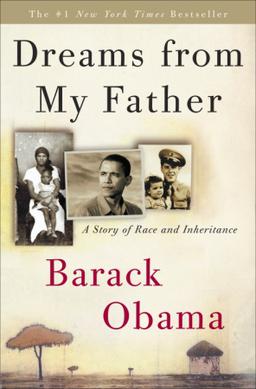 Dreams from My Father: A Story of Race and Inheritance is a memoir by President Barack Obama, written after he was the first African-American elected president of the Harvard Law Review. It was first published in 1995, before his first political campaign, and was republished in 2004, during his U.S .Senate race. So while there are politics in this book, it is not about his life as a politician. And unlike so many of the books politicians put out during a campaign, it is still interesting to read when the race is over.
The outlines of President Obama's life are well-known: his white mother from Kansas and his black father from Kenya met in college in Hawai'i, married, and had him. Soon after, his father left, first to go to Harvard, then back to Africa, and only returned for a month when Barack Jr was 10. Barack Sr. died without his son having gotten to know him as an adult.
Dreams from My Father can be read on two primary levels: one is simply as a man's life story. Obama's young life was somewhat unusual - growing up in Hawai'i and Indonesia, time as a community organizer in Chicago, family in Kenya - but not, I think, so extraordinary as to be incomprehensible. (It's not like he grew up on Mars, after all.)
The other way one can read this book is as a meditation on race in America. Obama explores what was like to grow up as a black man, even though his white mother and grandparents raised him. Along the way, he discusses how race effects the way a person is viewed in this country and what it means to straddle different cultures, not just brown vs. white, but African vs. American.
I found Dreams from My Father to be an interested, thought-provoking read. Would it be as interesting if you didn't know this young man would grow up to be President? I believe so.
Dreams from My Father: A Story of Race and Inheritance
Tuesday, June 7, 2011
Review: Outliers

I really enjoyed Outliers: the Story of Success by Malcolm Gladwell. The premise of this book is, what makes high-achievers (and low achievers, really) different? Gladwell argues that the answer lies much less in their innate talent (or faults), and more in the atmosphere surrounding them - their culture, family, upbringing, etc. Some of these factors may be obvious - your parents education level has a huge impact on you, which makes sense - and many are not. I was particularly interested in his examination of the "Culture of Honor" and why the famed Hatfield-McCoy feud was not the rarity I thought (for more, here's an excerpt from Outliers).
I will say that I had heard Gladwell interviewed about this book several times, so some of it didn't feel fresh to me. For example, I had heard quite a bit about the part of the book dedicated to exploring why almost no star hockey players are born in the fall. Still, I thought it was interest and it certainly confirmed my thought that the birthday cutoff for kindergarten should be moved up from the typical December deadline (something our local school system has started doing for budget reasons).
Some readers might complain that Gladwell is oversimplifying complex social issues. They may be right. But I found this to be a fascinating look at a complicated question.
Outliers: The Story of Success was released in paperback today (June 7).
I will say that I had heard Gladwell interviewed about this book several times, so some of it didn't feel fresh to me. For example, I had heard quite a bit about the part of the book dedicated to exploring why almost no star hockey players are born in the fall. Still, I thought it was interest and it certainly confirmed my thought that the birthday cutoff for kindergarten should be moved up from the typical December deadline (something our local school system has started doing for budget reasons).
Some readers might complain that Gladwell is oversimplifying complex social issues. They may be right. But I found this to be a fascinating look at a complicated question.
Outliers: The Story of Success was released in paperback today (June 7).
Wednesday, May 4, 2011
Series Thoughts: Anne of Green Gables
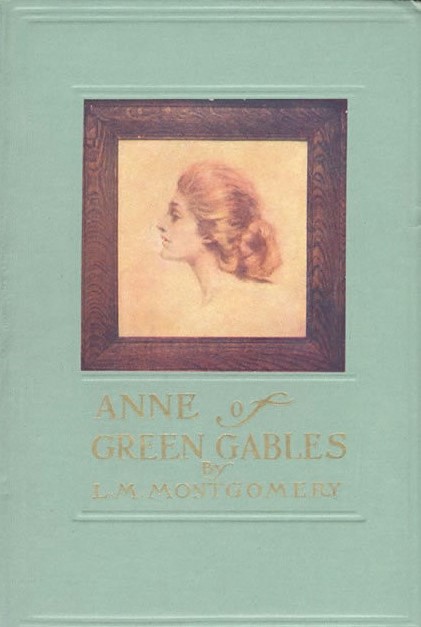 While I was out on maternity leave, I re-read the entire Anne of Green Gables series. I really enjoyed reading the series but something struck me that I'd never thought of before: these books are kind of sad. Maybe its that I was just recently a mother myself but the shear quantity of dead people (especially mothers and babies) struck me. After my husband found me crying while reading for about the fourth time (granted, postpartum hormones were probably not helping), he asked me "are you sure these are supposed to be kids books?" None of this is to say that you shouldn't read Anne of Green Gables or its sequels yourself or to your child. They really are quite charming and I love Anne as much now as I did when I first read the series.
I was surprised by how much I loved the last book in the series, Rilla of Ingleside. This book focuses not on Anne, but onto Anne's youngest daughter Rilla. It takes place during World War I and has a more serious tone than the early books. Maybe this is just me, but I know so little about WWI that I had to look up many of the references in this book - this could have been annoying, but I enjoyed getting the history lesson. (Per Wikipedia, Rilla of Ingleside is "the only Canadian novel written from a women's perspective about the First World War by a contemporary.")
There's something else that I realized for the first time on this go-round through these books: the chronological order is not the same as the published order. For example, Rilla of Ingleside was published sixth, but is the last/eighth book chronologically. Normally I am a firm believer in reading books in publication order (see Chronicles of Narnia, etc) but I liked reading these chronologically. It was like getting to watch kids grow up. There were some odd moments by reading them this way. For example, the love letters between Anne and her beau (my lame attempt to not spoil something that everyone in the world knows anyway) were published in the (mostly-epistolary) Anne of Windy Poplars. Chronologically, this book is fourth in the series, but it was the seventh book published. Those love letters are referenced in Anne's House of Dreams (book 5) in such a way, I think, to make them sound private, which was weird since I had just read them. But that is a pretty minor point. What do you think? Should you read these books in published or chronological order?
Find books by L.M. Montgomery on Project Gutenberg or Amazon.
Wednesday, April 27, 2011
Alvar Aalto
There's a very nice slideshow up on Slate today about the residential design of Finnish architect Alvar Aalto: A Low-Key High Modernist: The unpretentious houses of Alvar Aalto. Villa Mairea is one of my favorite buildings, but I also loved the last house in the show. I have the exposed brick in my house - now I need a lovely little reading corner like that!
Wednesday, April 20, 2011
Review: My Man Jeeves
My Man Jeeves by P. G. Wodehouse is one of those books that everyone says is funny, but I'm always suspicious that it actually is. So, get this - it is! My Man Jeeves is a collection of eight short stories by Wodehouse -- half feature the perfect* butler Jeeves and his employer, Bertie Wooster, while the others are about Reggie Pepper, an early prototype for Wooster. While I definitely preferred the Jeeves stories over the Pepper ones, the whole book is quite amusing. And short! Just the perfect thing to read between diaper changes and late night feedings, when your brain is too frazzled to read anything more serious. Or maybe that's just me.
Buy My Man Jeeves on Amazon or download free at Project Gutenberg.
*Edited for bad writing!
Buy My Man Jeeves on Amazon or download free at Project Gutenberg.
*Edited for bad writing!
Subscribe to:
Posts (Atom)